

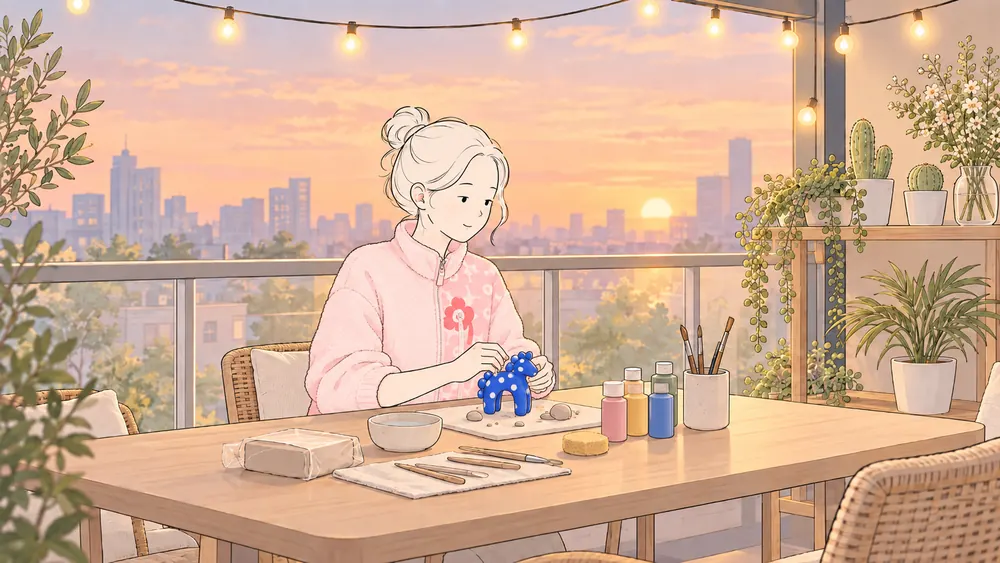
When work, messages, entertainment and everyday errands all seem to involve a screen, doing something physical with your hands can feel like a welcome change of pace.
A good screen-free hobby does not need to fill an entire afternoon or require a cupboard full of supplies. Some offer quiet repetition, some give you something tangible at the end, and others simply make it easier to focus on one thing for a while.
Here are seven screen-free hobbies to try at home, whether you are looking for something creative, absorbing, social or easy to pick up when you have a little free time.
What Makes a Good Screen-Free Hobby?
The best hobby is usually one that fits comfortably into the way you already live.
Think about how much space you have, how much cleanup you are willing to deal with and whether you prefer detailed concentration or something more repetitive. It also helps to consider whether you want a project you can finish quickly or one you can return to over several days.
Screen-free does not have to mean treating every screen as forbidden. A tutorial, pattern or reference image can be useful when you are learning. The important difference is that the screen supports the activity rather than becoming the activity.
| Hobby | Best for | Space needed | Easy to pause? |
|---|---|---|---|
| Crochet | Repetitive making and portable projects | Small | Yes |
| Making small things from clay | Tactile creativity and decorative projects | Small to medium | Depends on material |
| Sketching | Observation and low-setup creativity | Very small | Yes |
| Beading | Colour, detail and social crafting | Small | Yes |
| Loose-leaf tea tasting | Sensory exploration and quieter routines | Very small | Yes |
| Jigsaw puzzles | Problem-solving and longer projects | Medium | Yes, with suitable space |
| Origami | Precise, low-clutter paper craft | Very small | Yes |
Seven Ideas for Hands-On Time at Home
1. Crochet
Crochet can be a good choice if you enjoy repetitive work and the satisfaction of watching something gradually take shape. It also stores easily, so it works well when you do not have room for a permanent craft area.
A small coaster or simple square can be an easier starting point than a large wearable project. Once the basic stitches feel familiar, the same skills can be used for bags, scarves, hats and decorative pieces.
I learned crochet through classes and still find visual demonstrations much easier to follow than written patterns. If you learn in a similar way, a short tutorial can help with a technique before you put the screen aside and continue working with your hands.
2. Make Small Things From Clay
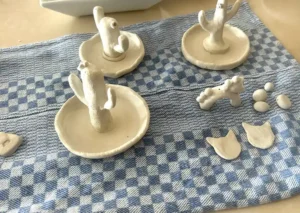
Clay is especially appealing if you want a hobby that feels tactile from the beginning. You can shape, adjust and restart a small object as you work, without needing to plan every detail in advance.
For beginners, air-dry clay is one accessible option, but always follow the drying, curing, painting and finishing instructions for the particular material you choose. Decorative dishes should also stay decorative unless the clay and finish are specifically intended for food contact.
Small ornaments, miniature figures and simple decorative objects are manageable first projects. I have also made an egg holder, and one early version was too thin and did not turn out properly, so I started again. That kind of trial and error can feel much more manageable when the project is small.
Clay can also make an easy shared activity. Everyone can work from the same table and still make something completely different.
3. Sketch What Is Around You
Sketching has one of the lowest barriers to entry on this list. A pencil and a small notebook are enough to begin, and the subject can simply be something already in front of you.
Try a plant, the outline of a building, a chair or part of a room. Ordinary subjects remove some of the pressure to produce impressive artwork and turn the activity into an exercise in noticing shape, proportion and small details.
When I have spent time sketching, I have often chosen buildings, plants or furniture arrangements rather than elaborate subjects. Familiar things are useful because you can begin without spending time deciding what to draw.
4. Beading and Bracelet Making
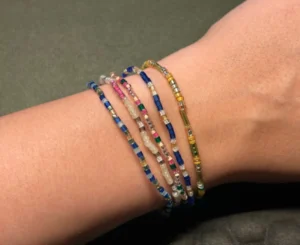
Beading is good for people who enjoy colour, small details and seeing a project come together relatively quickly.
A simple bracelet needs very little workspace, and changing the colours or arrangement of a few beads can make each piece feel different. A divided storage box is useful if you plan to keep going, since small supplies become difficult to manage when everything is mixed together.
I have also tried bracelet making with friends. It works particularly well as a shared hobby because several people can use the same general materials while choosing completely different combinations and styles.
5. Explore Loose-Leaf Tea Tasting
Loose-leaf tea can become more than an everyday drink when you start comparing aromas, flavours and different styles of tea.
You do not need a large collection. Trying a few teas slowly can help you notice what you actually prefer. Preparation guidance can vary by tea, so following the instructions provided with the leaves is a sensible starting point.
I enjoy comparing loose-leaf teas and paying attention to aroma, timing and flavour. Oolong, jasmine tea, sencha and Korean oksusu-cha are among the teas and infusions I tend to enjoy.
From there, the hobby can stay as simple as tasting a new tea occasionally and noticing what makes you want to brew it again.
6. Work on a Jigsaw Puzzle
Jigsaw puzzles are useful when you want something absorbing without needing to invent or design anything yourself.
Choosing the image matters more than it might seem. If you are working on a large puzzle over several days, it helps to choose artwork or a scene you genuinely enjoy looking at.
I tend to choose 1,000-piece puzzles featuring paintings by artists such as Klimt, Georges Seurat and Johannes Vermeer. I usually sort the pieces first and work through the puzzle over time rather than trying to complete it in one sitting.
The main practical issue is surface space. A puzzle board or another place where the pieces can remain undisturbed makes a large puzzle much easier to return to.
7. Try Simple Origami
Origami requires very little equipment, which makes it particularly appealing if storage and clutter are important considerations.
A few sheets of paper are enough to begin. Start with beginner-friendly shapes and straightforward folds rather than choosing an intricate model immediately. The process itself will tell you fairly quickly whether you enjoy the precision and concentration involved.
Origami is one I am interested in trying more rather than something I have much personal experience with, so I would be starting with beginner shapes too.
If you are curious about origami too, a simple beginner fold is enough to find out whether you enjoy the process.
How to Choose a Screen-Free Hobby You’ll Actually Enjoy
The practical side matters just as much as the hobby itself.
If you have limited space, crochet, sketching, origami and loose-leaf tea are easy to keep compact. Clay and beading need a little more preparation and cleanup, while a large puzzle needs a surface that can stay occupied between sessions.
Think about concentration too. Sketching and origami may appeal when you want to pay close attention to small details. Crochet can offer more repetition once the basic movements become familiar. Puzzles give you a problem to solve gradually, while tea tasting asks for a quieter kind of attention.
You can also decide whether you prefer doing something alone or turning it into a shared afternoon. Clay and beading work particularly well with friends, while almost any of these hobbies can be enjoyed quietly at home.
Give Your Attention Somewhere Else for a While
A screen-free hobby does not need to become another commitment. Sometimes it is enough that, for a little while, your attention goes somewhere different.
That might mean shaping a small clay figure, trying a new tea, finding the next puzzle piece or sketching the plant beside your window.
Choose something that fits the amount of space, concentration and free time you realistically have. If you enjoy returning to it, that is enough reason to keep it.
If you are also looking for small ways to create more breathing room in ordinary days, you may enjoy my cozy daily routine. For particularly tiring weeks, this gentle reset after a long work week offers a different kind of slower reset.