

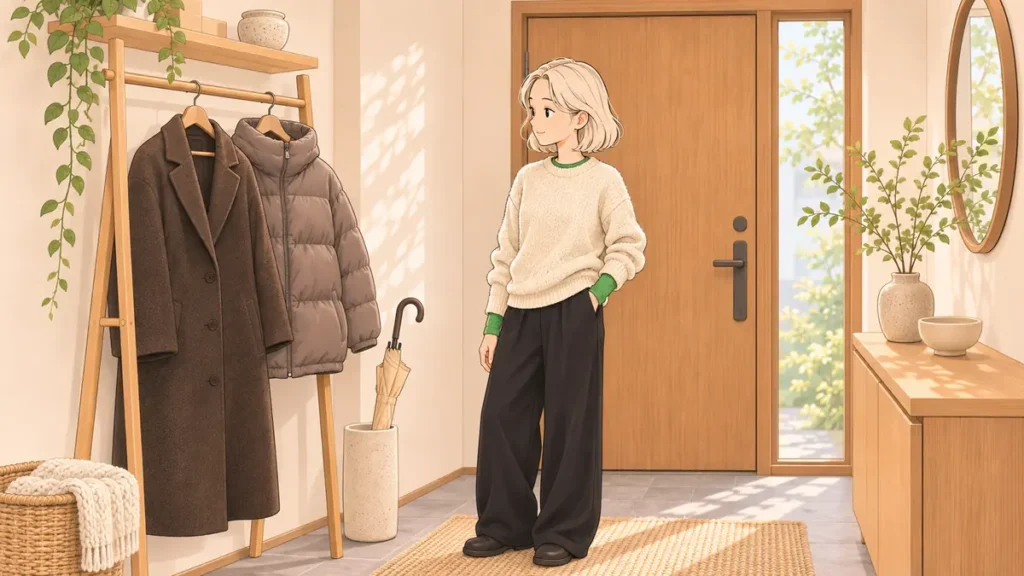
On a chilly morning, a warm jumper and coat might feel like the right choice. But once you step into a heated office, shop or café, the same outfit can suddenly feel too warm.
The useful part of layering clothes for cold weather is being able to adjust what you wear throughout the day. A comfortable base, a removable middle layer and a weather-appropriate outer layer provide a simple starting point.
You do not always need all three. The idea is to find a combination that suits the weather, where you are going and how much time you will spend indoors.
Start With a Comfortable Base
The first layer should feel pleasant against your skin and sit comfortably beneath whatever you wear over it. A plain T-shirt, sleeveless top or long-sleeved shirt can all work, depending on the temperature.
Wearing a simple top underneath wool knitwear can help reduce direct contact with fabric that feels itchy against the skin. A sleeveless top only covers the torso, though, so a T-shirt with sleeves or a long-sleeved layer may be more comfortable if the wool irritates your arms.
On milder days, an ordinary lightweight top may be enough. When temperatures drop, you might prefer something warmer. The important thing is choosing a base that works comfortably with the rest of your clothes rather than adding thickness automatically.
Add a Middle Layer You Can Remove Easily
A cardigan, jumper or hoodie can add warmth without making the whole outfit difficult to adjust.
A cardigan is particularly convenient if you move between cooler and warmer spaces, while a comfortable jumper may be all you need beneath a coat on an ordinary winter day. A zip-up hoodie also offers an easy way to adjust warmth without taking it off completely.
Think about where you will spend most of your time. If an office or café is slightly cool, you may want to keep your cardigan on after removing your coat. If the room is warmer, having the option to take it off is useful.
The warmth of your outerwear matters too. A very warm coat might only need a long-sleeved top underneath, while a lighter jacket may work better with a thicker jumper.
Choose an Outer Layer for the Actual Weather
Before reaching for your warmest coat, consider what the day will involve.
For dry, chilly weather, a comfortable coat can provide warmth without needing several heavy layers underneath. A trench coat or lighter jacket may be enough when temperatures are milder, especially over knitwear.
Rain, snow and strong wind call for more attention to protection. A hooded waterproof jacket can be practical in wet conditions, although waterproofing alone does not mean a jacket will be warm enough in freezing weather.
The amount of time you spend outside also makes a difference. A short walk from the car to a shop is different from waiting for public transport or spending a longer afternoon outdoors.
For severe cold or prolonged exposure, ordinary everyday layers may not provide enough protection. Suitable insulation, weather protection and accessories become more important.
Keep the Layers Comfortable Together
Even a warm outfit can feel uncomfortable if the clothes do not fit well together.
Several thick layers can bunch around the arms and shoulders, making it harder to move naturally. Try checking how your coat feels when you reach forward, sit down or fasten it over your jumper. If it pulls or feels restrictive, a finer middle layer or roomier outerwear may work better.
This does not mean every coat needs to be oversized. It simply needs enough space for the clothing underneath while allowing you to move comfortably.
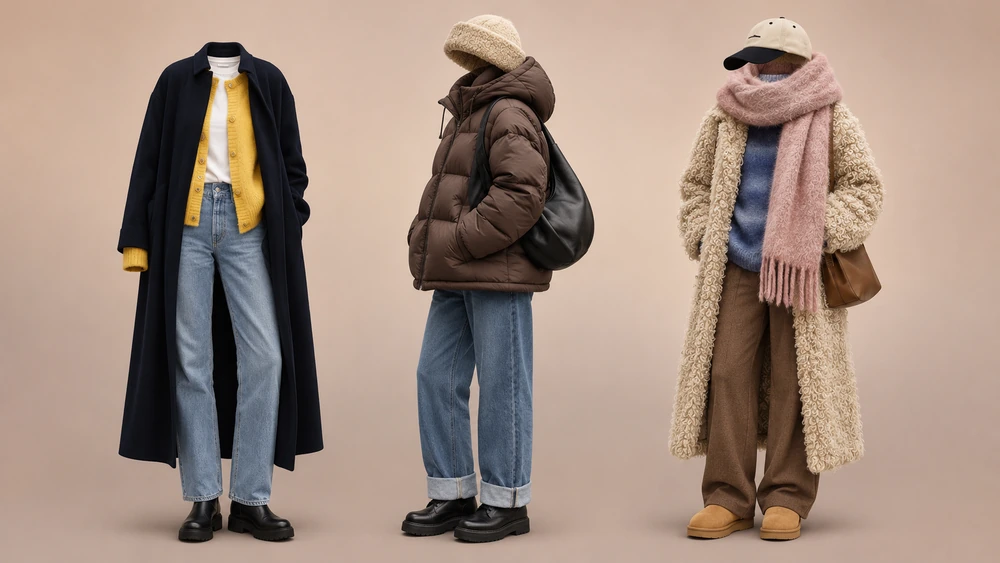
Three Everyday Outfit Combinations
These combinations are starting points you can adapt with clothing already in your wardrobe.
For an Ordinary Workday
For an ordinary workday or a meeting outside the office, try a coat with smart-casual trousers, a cardigan over a basic top and boots. A scarf can add warmth when needed.
The coat provides protection during the journey, while the cardigan and top can remain comfortable once indoors. This combination allows you to adjust to the temperature without changing the whole outfit.
For Errands or a Café Visit
For a quick supermarket trip, a few errands or a café visit, keep things straightforward.
On a mildly chilly day, a long-sleeved top with a suitable jacket may be enough. If it is colder, a light jumper underneath can provide extra warmth.
Choose something easy to remove or unzip when you step indoors, particularly if you will be moving between several places.
For a Colder Day Outdoors
When you expect to spend longer outside, try a comfortable long-sleeved base, a warmer jumper and an outer layer suited to the weather.
A scarf, gloves or hat can provide extra protection when needed. A large scarf can also help cover the neck and upper body, depending on how it is worn.
If the weather becomes wet or snowy, prioritise appropriate outerwear. The combination should provide suitable protection while still allowing comfortable movement.
Once you've found a comfortable combination of layers, you can also think about how the colours work together. For seasonal inspiration, our autumn colour combinations offer a few simple ideas.
Make the Layers Work for Your Day
A useful layering habit is to consider the whole day, not just the temperature when you leave home. Think about the weather, how long you will be outdoors and whether you will spend time in warmer indoor spaces.
Some days call for a warmer coat, others for an extra jumper, and sometimes two layers are perfectly sufficient. Choose what feels comfortable and practical for the day ahead.