

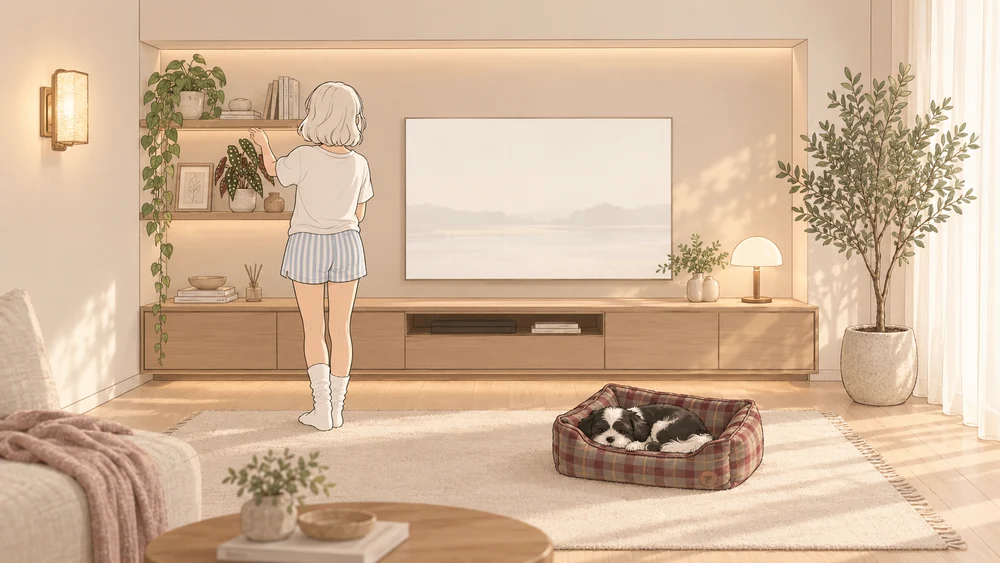
Plants can bring warmth and life into a room without filling every shelf or corner. I usually prefer a more restrained approach: one larger plant standing on its own, something trailing in the kitchen, or a small pot placed where it can be noticed without taking over the surface around it.
I also prefer plants with manageable care needs. For me, greenery should make home feel more comfortable while still working with an ordinary routine.
The seven Japandi plants below include easier choices and a few that need more attention. Before choosing one, it helps to consider the light in your home, how much care you realistically want to give, how much space the plant may need as it grows, and how naturally it can become part of the room.
What Makes a Plant Work in a Japandi-Style Home?
For this article, “Japandi plants” does not mean plants that are Japanese in origin. Instead, I am looking at houseplants that can sit naturally within a simple, uncluttered interior.
A defined silhouette, trailing foliage, gentle natural colour, or one strong plant standing alone can all work well. Neutral ceramic, clay, stone, wood, and muted finishes also pair easily with greenery.
I would not choose by appearance alone. Even the prettiest plant will struggle if the room is too dark or the care routine does not fit your week. Looking at your actual light and routine is usually more useful than choosing a plant only because it looks lovely in an interior photograph.
Japandi Plants at a Glance
| Plant | Visual role | Care level | Best for |
|---|---|---|---|
| ZZ plant | Upright and sculptural | Easy | Beginners and less frequent watering |
| Heartleaf philodendron | Soft and trailing | Easy to moderate | Shelves and hanging spots |
| Pilea peperomioides | Small and rounded | Easy | Small spaces and tabletops |
| Olive tree | Tall and airy | Moderate | Very bright rooms |
| Ficus ginseng bonsai | Miniature tree | Moderate | More hands-on care |
| Monstera deliciosa | Large statement greenery | Easy to moderate | Bigger corners |
| Polka dot begonia | Patterned and colourful | Moderate | A little natural colour |
7 Japandi Plants for a Soft, Minimal Home
1. ZZ Plant: An Easy, Sculptural Starting Point
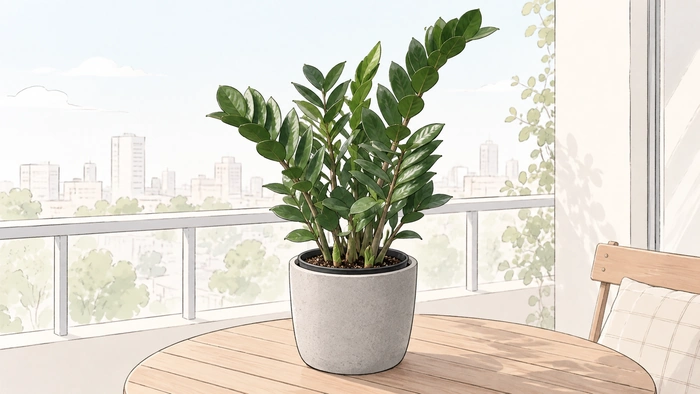
The ZZ plant, Zamioculcas zamiifolia, has thick upright stems lined with smooth, glossy leaflets. Its deep green colour and tidy shape give it enough presence for an empty corner, low stand, or simple shelf without adding much visual movement.
It tolerates a range of indoor light conditions and stores water in its fleshy underground rhizomes, so it handles drier periods better than many houseplants. Good drainage is still important. NC State Extension describes it as a low-maintenance, drought-tolerant houseplant.
This may suit beginners, occasional travellers, or anyone who prefers a plant that does not need frequent watering.
2. Heartleaf Philodendron: Soft Trailing Greenery
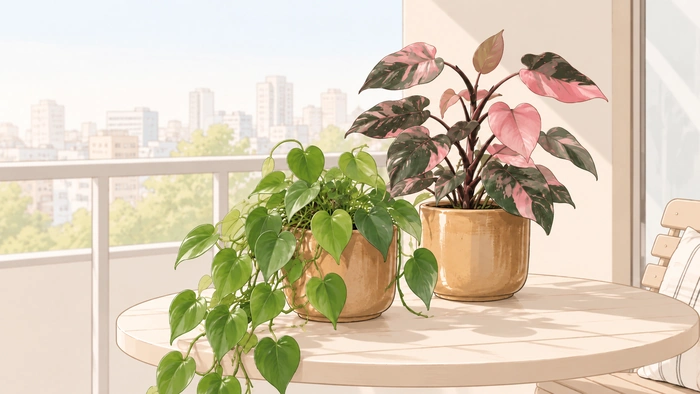
I have a heartleaf philodendron, Philodendron hederaceum, in my kitchen. I like the way its leafy stems fall over the edge of a shelf, bringing a little movement into the room without using any floor space.
Heartleaf philodendrons prefer bright, indirect light and should be allowed to dry slightly at the top between waterings. Their climbing or trailing habit makes them especially useful for shelves and hanging planters. The RHS philodendron growing guide also recommends smaller climbing philodendrons such as heartleaf forms for high shelves and hanging containers.
If you want a little more colour, Pink Princess Philodendron is a more decorative variation. Its pink markings can add a gentle accent among otherwise green foliage without turning it into a separate styling theme.
3. Pilea Peperomioides: A Small Plant for Shelves and Tables
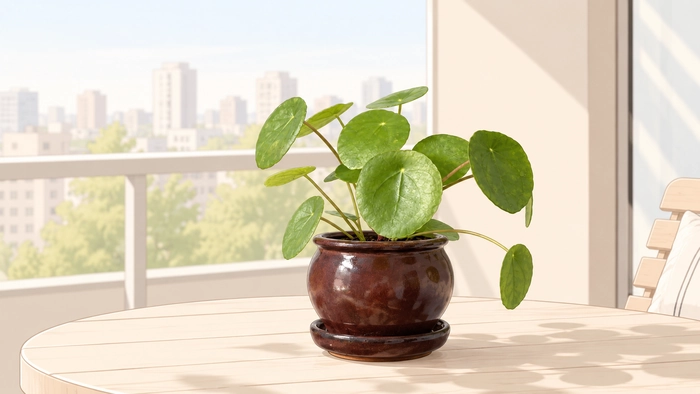
Pilea peperomioides has round, coin-shaped leaves held on slender stems, giving it a light, almost playful outline. It works particularly well on a side table, desk, narrow shelf, or small plant stand where its distinctive shape can be seen properly.
It prefers bright, indirect light and free-draining compost, with watering once the upper layer begins to dry. The RHS Pilea guide describes Chinese money plant as compact and easy to grow, while noting that overwatering should be avoided.
I generally enjoy buying smaller plants and watching them develop over the years, so I like the idea of starting with a young plant and letting its rounded canopy gradually fill out.
4. Olive Tree: Airy Greenery for a Very Bright Room
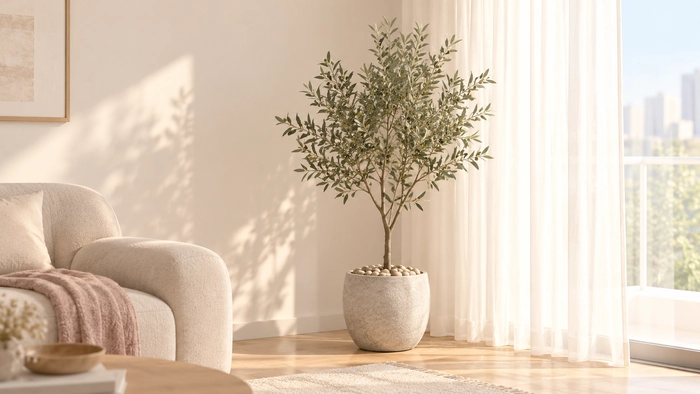
Olive trees have a very different presence from tropical houseplants. Their slim, grey-green leaves and open woody branches allow plenty of light and space to remain visible around them, which can make a taller tree feel surprisingly light in a room.
I have an olive tree growing outdoors at home, and it produces olives. For an olive being considered as an indoor plant, however, I would pay close attention to light.
Olea europaea prefers full sun and well-drained growing conditions. The RHS common olive profile lists it for a full-sun position, so an indoor olive needs a genuinely bright location rather than a shaded corner chosen mainly for appearance.
For the right bright space, it can be a beautiful single statement plant without needing much decoration around it.
5. Ficus Ginseng Bonsai: A Sculptural Choice With More Hands-On Care
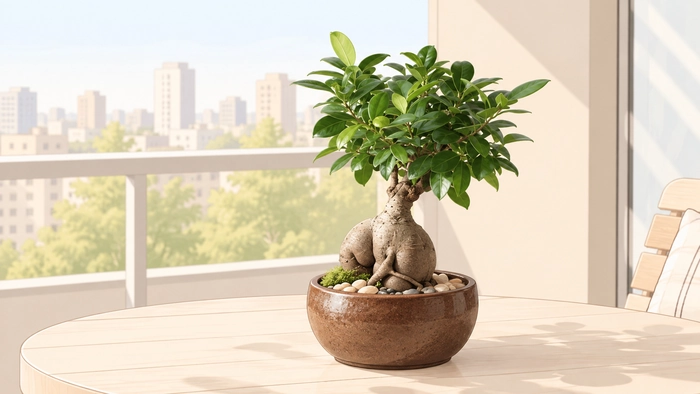
I also have a Ficus ginseng bonsai, Ficus microcarpa ‘Ginseng’. Its thick, rounded trunk and compact crown make it look almost like a miniature old tree, which gives it a strong shape even on a small surface.
I like its appearance, but bonsai feels like a different level of plant care to me once pruning, shaping, soil, and longer-term maintenance become part of the routine.
Ficus ginseng can be grown as an indoor bonsai and prefers good light with moist but well-drained growing conditions. The RHS Ficus ginseng profile covers its indoor growing requirements. It may suit someone who enjoys giving one plant a little more attention rather than looking for the most hands-off option.
A clear tabletop or simple cabinet gives its trunk and branching shape room to stand out.
6. Monstera Deliciosa: One Large Plant Instead of Many Small Ones
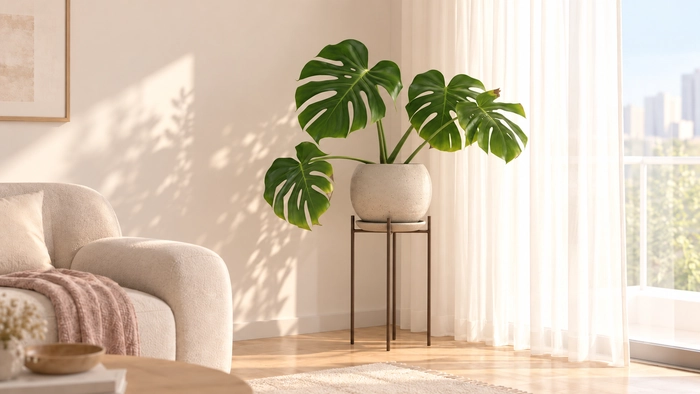
Monstera deliciosa is one plant I would genuinely like to have, although I have not personally cared for one.
Its broad, glossy leaves develop their familiar splits and holes as the plant matures, giving it a bold architectural shape. That scale is exactly why I think it can work in a more restrained interior. Instead of surrounding it with several smaller pots, one Monstera can become the main green feature in a larger corner.
The RHS Swiss cheese plant growing guide recommends bright, indirect light and notes that these plants can eventually become very large. Available floor space and future growth are therefore worth considering before bringing one home.
A single larger plant can sometimes make a room feel more balanced to me than a collection of small pots competing for attention.
7. Polka Dot Begonia: A Little Colour Without Making the Room Busy
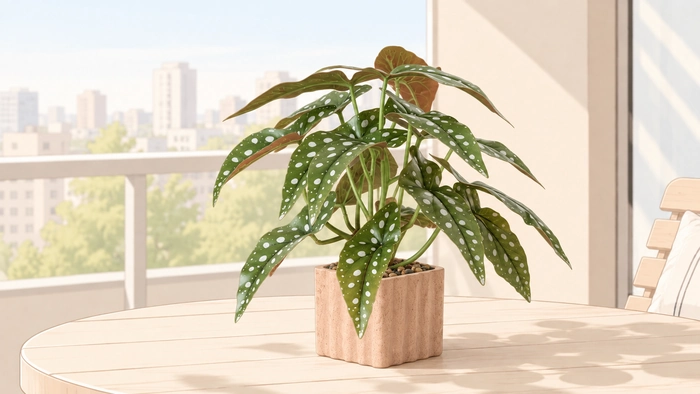
The polka dot begonia, Begonia maculata, is the most decorative choice on this list. Its elongated green leaves are scattered with silvery-white spots, while the undersides bring in a deeper reddish tone. It can also produce pale pink or white flowers, adding another small change of colour without needing decorative accessories around it.
It prefers filtered light and moist but well-drained growing conditions. The RHS Begonia maculata profile provides further growing details. Compared with the more forgiving plants on this list, it asks for a little more attention to watering and placement.
I usually like green plants, but I also enjoy colour when it appears naturally through leaves or flowers. A polka dot begonia could work well as one expressive plant among simpler foliage.
How to Keep Japandi Plant Styling Soft and Uncluttered
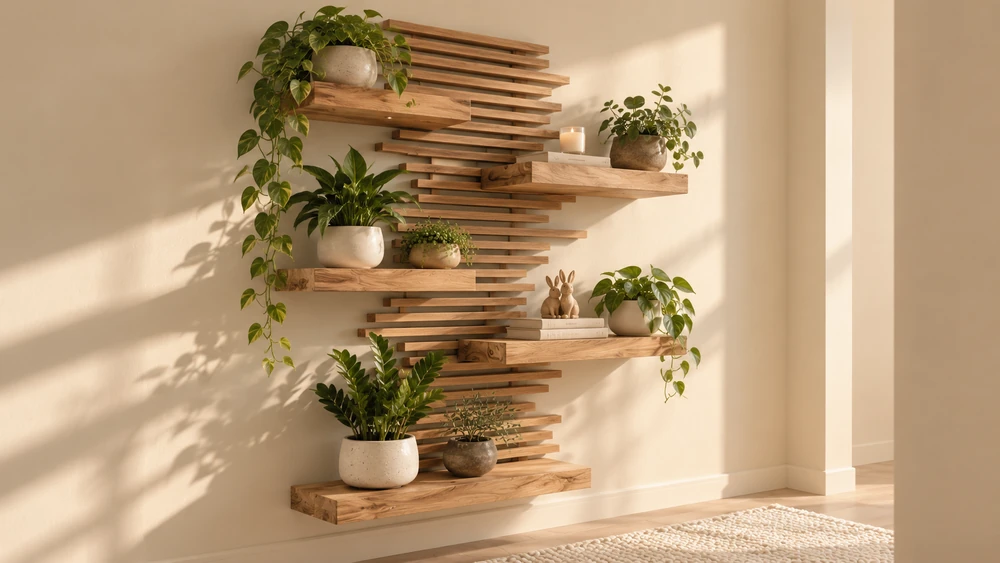
Indoors, I prefer plants to have some breathing room. A full “home jungle” can feel overwhelming to me, especially when every shelf, table, and windowsill is occupied.
I like layered shelves because I can place pots at different heights and rearrange them as plants grow. At the same time, every plant does not need to be grouped. One large plant in a corner, a trailing plant in the kitchen, or a small pot on a bedroom surface can be enough.
Plants do not have to match perfectly either. I usually respond to the individual plant first, then decide where it looks most natural at home.
My balcony is a little different. I do not mind a plant shelf looking fuller there, especially with seasonal flowers, herbs, or other balcony plants. Indoors, I prefer more open space and clearer gaps between things.
If you are also looking for simple ways to make your home feel cozier, plants can add warmth and character without becoming the main focus of the room.
Choose Pots That Look Calm but Still Work for the Plant
I am naturally drawn to ceramic, stone, clay, beige, dark brown, and off-white pots. These colours sit easily beside green foliage and work well with wood and other natural materials.
Still, drainage matters more than finding the perfect-looking container. If a decorative ceramic or stone planter does not have drainage holes, one practical option is to keep the plant in a removable nursery pot inside it and empty any collected water after watering.
Plastic pots are useful too. They are lighter, easy to clean, safer if dropped, and convenient when plants need moving. They may not always be my first aesthetic choice, but practical plant care can stay simple behind the decorative outer pot.
A Practical Pet-Safety Note for Indoor Plants
“Japandi plant” describes how a plant may work within an interior style. It is not a pet-safety category.
Many attractive houseplants can irritate or harm cats and dogs if they chew or swallow them. Some plants mentioned in this article need particular caution around pets, including philodendron, Monstera, ZZ plant, Ficus, and begonia. Before buying, it is best to check the exact botanical name in a reputable pet-toxicity database.
As a pet owner myself, I think it is worth checking the scientific name rather than relying only on the common name, because common plant names can overlap.
Placement needs some thought too. A high shelf is not automatically inaccessible. Cats may climb, pets may reach hanging leaves, and fallen foliage can end up on the floor. If a plant is toxic, or the information is uncertain, choose a position your pet genuinely cannot access.
Even plants listed as non-toxic should not be treated as something pets can freely eat. Plant material can still cause digestive upset, so it is sensible to discourage chewing regardless of the plant’s classification.
Choose the Plant That Fits Your Home, Not Only the Photograph
I have learned not to trust the photograph first. A plant can look perfect in a styled room and still be completely wrong for the light you actually have.
Before choosing one, look at the natural light, how often you realistically want to water or prune, how large the plant may become, and whether pets can reach it. It also helps to decide whether you want straightforward greenery or a plant that becomes more of a hobby.
The plant I would choose is not always the rare one. It is the one I can actually live with, care for, and enjoy seeing at home.